
Why Cultural Fluency Is the Last Competitive Advantage
CULTURAL INTELLIGENCE
As markets converge and messages multiply, understanding, not assuming, is the rarest and most durable edge a brand can hold.

By Yvonne Maffei | March 2026 | 3 min read
A quiet passage shaped by place, memory, and everyday life.
For most of the last century, competitive advantage was a question of scale, speed, or price. Those edges still matter, but they have grown crowded. What remains genuinely scarce is the ability to understand a culture well enough to earn its trust.
Cultural fluency is not the same as cultural sensitivity. Sensitivity is a posture; fluency is a competence. It can be studied, practiced, and, crucially, measured in the work it produces. Those who develop it are able to enter new contexts not simply as visitors, but as participants.
The cost of assuming
Most cross-cultural missteps are not failures of intention. They are failures of imagination, the quiet assumption that what reads as warm, or premium, or trustworthy in one culture will read the same way in another. It rarely does.
“A brand does not enter a culture. It is admitted into one, or it is not.”
The remedy is not more research for its own sake, but better questions. What does this audience hold sacred? Where are the lines between insider and stranger drawn? What forms of hospitality build trust, and which gestures quietly break it?
Fluency as practice
The good news is that fluency compounds. Each culture understood deepens the instinct for the next. Teams that learn to read one audience carefully develop the discipline to read others, and that discipline, more than any single insight, is the advantage that lasts.
In a world where everyone can reach everyone, the rarest thing is to be genuinely understood. Those who offer that understanding first will be the ones that are remembered.
"In a world where everyone can reach everyone, the rarest advantage is to genuinely understand one another."
— Yvonne Maffei
Receive thoughtful essays exploring culture, diplomacy, food, and the Mediterranean world.
CONTINUE THE CONVERSATION
RELATED READING

What food has always known about building trust across borders.

CULTURAL INTELLIGENCE
How landscapes, traditions, migration, and memory shape not only what we eat, but who we become.
MEDITERRANEAN CIVILIZATIONS
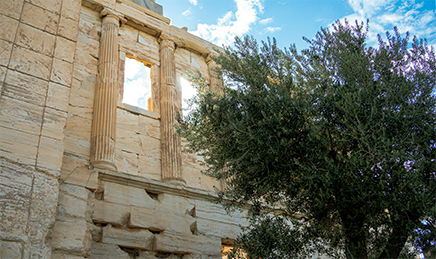
A tree rooted in the soil of many nations, carrying centuries of peace, memory, and shared civilization.