
The Geoeconomics of the Global Halal Food Economy and Its Impact on Sustainable Agribusiness
GLOBAL FOOD ECONOMY
Beyond certification and trade, the global halal food economy reveals how trust, transparency, sustainability, and international cooperation are reshaping the future of food systems.
By Yvonne Maffei • August 2026 • 12 min read
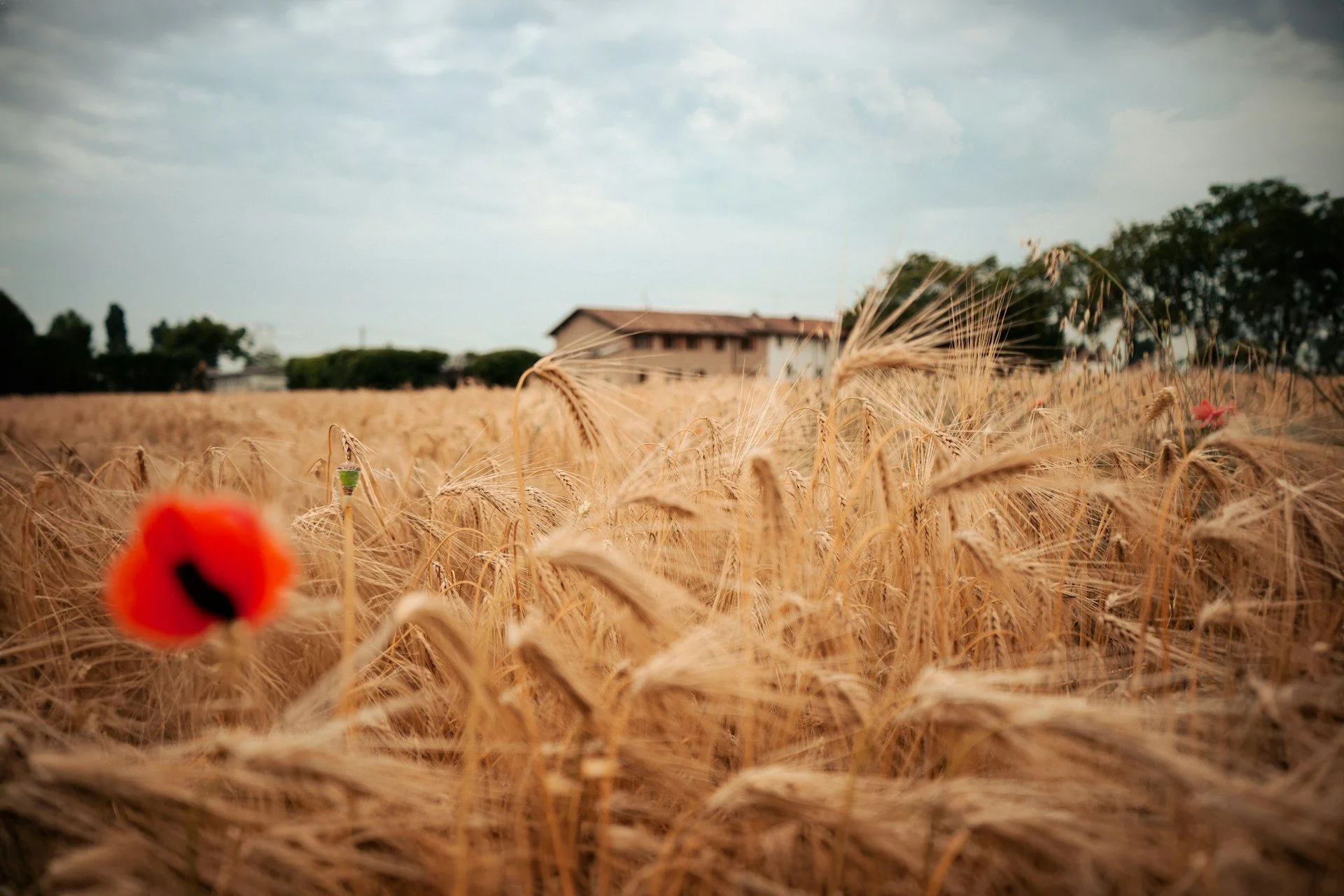
An olive grove overlooking the Mediterranean: A living landscape where agriculture, identity, and diplomacy have grown together for centuries.
Trust as Infrastructure
For many people, the word halal immediately brings to mind dietary rules or religious observance. While these are undoubtedly central to its meaning, viewing halal solely through the lens of food preparation overlooks the remarkable economic ecosystem that has developed around it. Today, the global halal economy represents one of the fastest-growing sectors of international trade, connecting producers, manufacturers, exporters, retailers, certifiers, policymakers, and consumers across every inhabited continent.
This growth is driven not only by demographics but also by changing consumer expectations. Increasingly, consumers—Muslim and non-Muslim alike—are asking where their food comes from, how it was produced, whether workers were treated fairly, how animals were raised, and what environmental impact accompanied its production. These questions are reshaping food systems worldwide, and they reveal something important: the conversation surrounding halal is becoming part of a much larger conversation about ethics, transparency, and sustainability.
To understand the halal economy today, we must first recognize that it is fundamentally a system of trust.
Consumers purchasing halal products rely on a chain of relationships extending from the farm to the processing facility, through transportation networks, certification bodies, retailers, and ultimately to their own tables. Every participant in that chain contributes to maintaining confidence that products have been produced in accordance with clearly defined standards.
Trust, however, has become one of the world's most valuable economic resources.
As international supply chains grow increasingly complex, consumers often know very little about how their food reaches them. Products routinely cross multiple borders before arriving on supermarket shelves. Ingredients are sourced from numerous countries, processed elsewhere, packaged in another location, and distributed through global logistics networks. In this environment, transparency is no longer simply desirable—it is becoming essential.
This is where the halal economy offers valuable lessons that extend far beyond Muslim consumers.
The principles underlying halal production emphasize accountability, traceability, responsible stewardship, cleanliness, and integrity throughout the production process. While certification standards differ across jurisdictions, the broader philosophy encourages producers to view food not merely as a commodity but as a responsibility. These values increasingly align with global conversations surrounding environmental stewardship, food safety, animal welfare, and sustainable agriculture.
Sustainable Agribusiness and Opportunity
From a geoeconomic perspective, the halal economy has become an increasingly influential component of international trade.
Nations across Southeast Asia, the Middle East, Europe, Africa, and the Americas are investing in halal infrastructure, certification systems, research institutions, export strategies, and agricultural development. Countries that once viewed halal primarily as a niche domestic market now recognize it as an important avenue for expanding exports and strengthening economic partnerships with Muslim-majority markets around the world.
These developments have significant implications for sustainable agribusiness.
Agriculture has always existed at the intersection of economics, ecology, and culture. Farmers depend upon healthy soils, reliable water supplies, biodiversity, and stable markets. Sustainable agricultural practices seek to protect these resources while ensuring long-term economic viability for rural communities. When thoughtfully integrated, halal production can complement these objectives by encouraging greater attention to quality assurance, ethical production, and long-term stewardship rather than short-term extraction.
This relationship becomes particularly meaningful for small and medium-sized producers.
Across the Mediterranean, Africa, Central Asia, Southeast Asia, and Latin America, many family-owned farms already practice forms of agriculture deeply rooted in tradition, environmental knowledge, and intergenerational stewardship. These producers often possess exactly the qualities modern consumers increasingly value: authenticity, transparency, craftsmanship, and close relationships with the land. Access to halal markets can provide new economic opportunities that reward these strengths while helping rural communities remain economically resilient.
"Trust, however, has become one of the world's most valuable economic resources."
Cooperation Through Innovation
Yet significant challenges remain.
One of the greatest obstacles facing the global halal economy is the lack of harmonization among certification standards. Producers seeking to export internationally often encounter multiple certification requirements that vary across countries and regions. This complexity increases costs, creates uncertainty, and can discourage smaller enterprises from participating in international markets despite producing high-quality products.
Improving international cooperation around standards does not require eliminating cultural or religious diversity. Rather, it requires strengthening dialogue among governments, industry leaders, certification bodies, and academic institutions to develop systems that maintain religious integrity while facilitating responsible trade. Greater transparency, mutual recognition, and regulatory cooperation can benefit producers and consumers alike.
Technology is also transforming the future of halal supply chains.
Digital traceability systems, blockchain technologies, satellite monitoring, and increasingly sophisticated food verification methods are creating new opportunities for documenting every stage of production. While these innovations are often discussed in technical terms, their broader significance lies in reinforcing consumer confidence. They strengthen the very foundation upon which halal markets depend: trust.
At the same time, technology should never replace the human relationships that have always underpinned successful food systems.
Farmers, processors, certifiers, researchers, traders, and consumers each contribute knowledge that no digital platform can fully replicate. Sustainable agribusiness ultimately depends not only upon efficient systems but also upon communities committed to ethical production, responsible stewardship, and long-term collaboration.
Trade as Diplomacy
This is where geoeconomics intersects with diplomacy.
Trade has always served as one of humanity's most enduring forms of international engagement. Agricultural partnerships encourage dialogue between nations, foster investment in rural development, and create opportunities for cooperation that extend beyond commercial exchange. Food has an extraordinary ability to build relationships because every society depends upon it, regardless of politics, language, or geography.
The halal economy occupies a particularly important position within this landscape because it naturally connects diverse regions of the world. Producers in South America supply markets in the Gulf. Agricultural exporters in Australia serve Southeast Asia. Mediterranean olive oil reaches consumers across North America. African producers develop partnerships with European distributors. These networks create not only economic value but also opportunities for cultural understanding and international cooperation.
Looking ahead, the future of the halal economy will likely be shaped by forces extending well beyond population growth. Climate change, water scarcity, regenerative agriculture, technological innovation, food security, and evolving consumer expectations will all influence how global food systems develop over the coming decades.
These challenges cannot be addressed through economic policy alone.
They require interdisciplinary thinking that brings together agriculture, trade, environmental science, public health, international relations, and cultural understanding. The halal economy, when viewed through this broader lens, offers more than commercial opportunity. It provides a framework for considering how ethical production, responsible stewardship, and international cooperation can contribute to more resilient food systems.
Looking Ahead
Ultimately, the geoeconomics of the halal food economy is not simply about expanding markets or increasing exports. It is about recognizing that food systems are among the world's most important forms of infrastructure, connecting people, landscapes, economies, and cultures across borders.
When these systems are built upon trust, transparency, sustainability, and mutual respect, they do more than move goods through global markets. They strengthen communities, encourage responsible stewardship of natural resources, and create lasting relationships between nations that are nourished not only by commerce, but by shared values.
"Food systems are among the world's most important forms of infrastructure, connecting people, landscapes, economies, and cultures across borders."
— Yvonne Maffei
Receive thoughtful essays exploring culture, diplomacy, food, and the Mediterranean world.
CONTINUE THE CONVERSATION
RELATED READING

What food has always known about building trust across borders.

CULTURAL INTELLIGENCE
How landscapes, traditions, migration, and memory shape not only what we eat, but who we become.
CULTURAL INTELLIGENCE
Understanding, not assuming, is the rarest and most durable edge a brand
can hold.
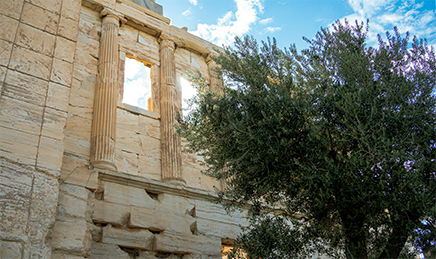
A tree rooted in the soil of many nations, carrying centuries of peace, memory, and shared civilization.